Discover the Life and Legacy of My Mother, Estelle Bennett of the Ronettes
finding Estelle is a deeply personal legacy project I created to preserve and share the remarkable life of my mother, Estelle Bennett of the Ronettes. Through storytelling, archival photographs, music, historical research, and personal reflections, the project celebrates Estelle’s artistic contributions while exploring the personal struggles that shaped her life. It’s a place to honor my mother’s legacy, raise awareness about mental illness, and ensure that her story is remembered for generations to come.
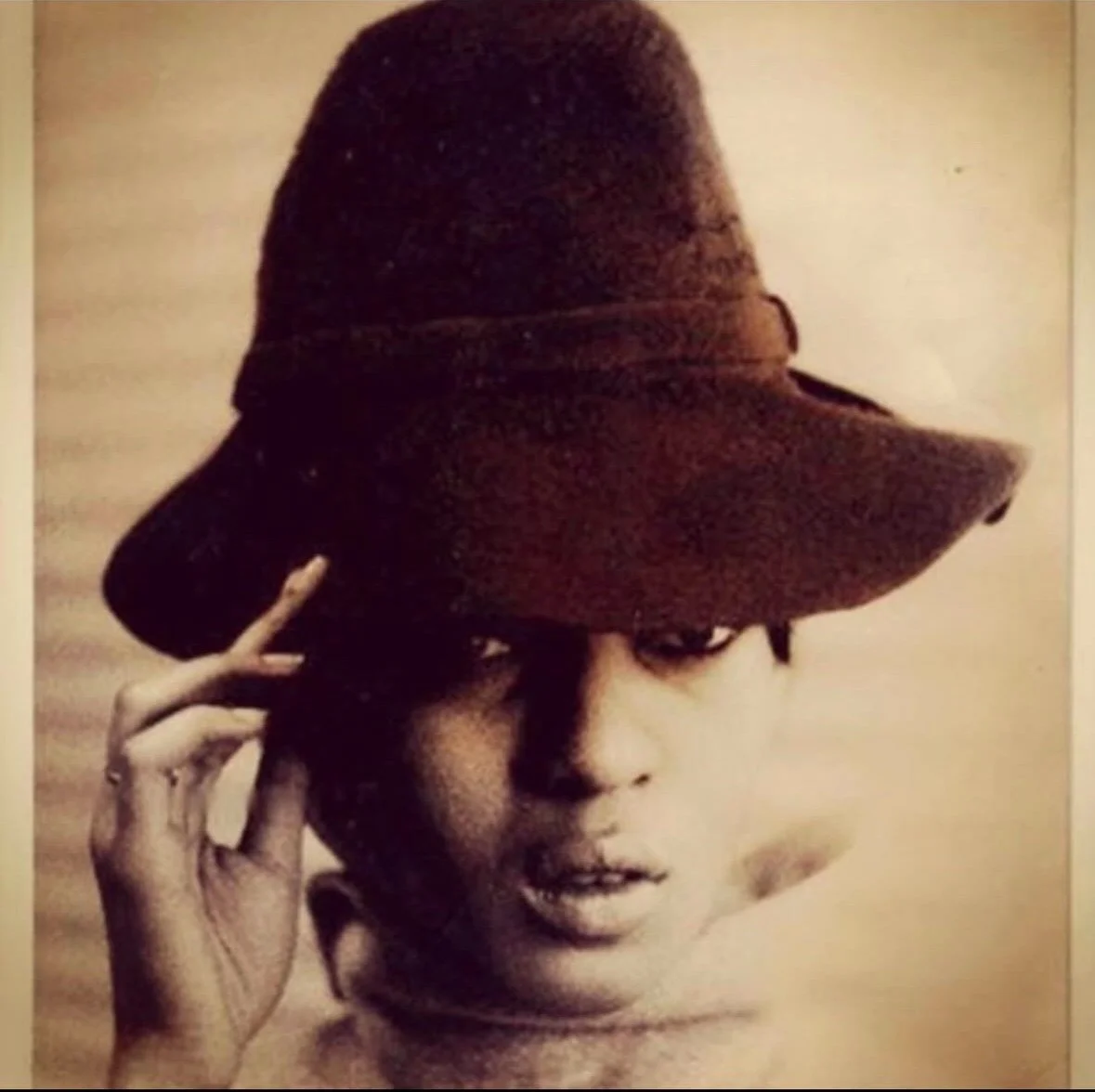
About My Project
finding Estelle brings together history, music, and memory to create a lasting home for my mother’s story. As the project grows, it will feature rare photographs, archival materials, personal stories, historical research, and special collaborations that celebrate her life and legacy.
The project will also include thoughtfully designed merchandise inspired by Estelle’s legacy helping introduce her story and artistic contributions to new audiences.
Why I created This Project
Growing up, I did not know my mother as a music icon. I knew her as a woman living with severe mental illness. I didn’t even learn that she had been a Ronette until I was about fourteen years old. After discovering who she had once been, I struggled for many years to reconcile the mother I knew with the artist the world admired. It wasn’t until I became an adult that I began to see her differently. As I learned more about my mother’s life and the challenges she endured, my confusion gradually gave way to compassion. Even today, I am still discovering my mother. Sometimes it’s through a photograph I come across, an article I’ve never seen before, or a story someone shares that offers a new glimpse into her life. Each discovery helps me better understand not only the extraordinary artist the world celebrated, but also the mother I never truly had the opportunity to know.
Finding Estelle is my journey to honor my mother’s life honestly, not by overlooking the hardships she faced, but by embracing the fullness of her life, celebrating her extraordinary contributions to music, and preserving her legacy for future generations.
My hope is that, through this project, others will join me in finding Estelle—with curiosity, compassion, and a deeper appreciation for the remarkable woman behind the music.
Bio
Estelle Bennett, July 22, 1941– Feb 11, 2009, was a founding member of the legendary vocal group the Ronettes, whose groundbreaking music and unmistakable style transformed popular music and continue to influence artists across generations. Alongside her sister Ronnie Spector and cousin Nedra Talley, Estelle helped create some of the most enduring recordings in popular music, including Be My Baby, Baby, I Love You, Walking in the Rain, Sleigh Ride, and many other beloved recordings. More than six decades after their release, these recordings continue to inspire musicians, filmmakers, and audiences around the world.
Born and raised in New York City, Estelle was an exceptional student, graduating as the valedictorian of her high school class before attending the Fashion Institute of Technology (FIT). Intelligent, creative, and deeply interested in fashion, she brought an artist’s eye to everything she did. Her passion for fashion and design helped shape the distinctive style that became synonymous with the Ronettes. Together, their music, fashion, and unforgettable image redefined what a female vocal group could be and left a lasting mark on popular culture.
As a member of the Ronettes, Estelle helped create one of the most influential groups in music history. Her poise, creativity, and musicianship were essential to the group’s enduring legacy. In 2007, the Ronettes were inducted into the Rock & Roll Hall of Fame in recognition of their lasting contributions to music and culture.
Behind the acclaim, however, was a deeply personal story. For much of her adult life, Estelle lived with severe mental illness, a struggle that gradually withdrew her from public life and overshadowed the remarkable artist she had once been. While millions continued to celebrate the Ronettes’ music, few came to know the woman behind it—or the quiet resilience with which she faced the challenges of her illness.
Today, Estelle’s legacy lives on through the timeless music she helped create, the generations of artists she continues to inspire, and the enduring influence the Ronettes have had on music, fashion, and popular culture.
Did You Know?
*
Did You Know? *
As I continue learning about my mother’s life and legacy, new pieces of her story come to light. From big milestones to quick trivia this is where I’ll post what I find.
Ronettes hit song Be My Baby has surpassed 1 BILLION streams on Spotify !!
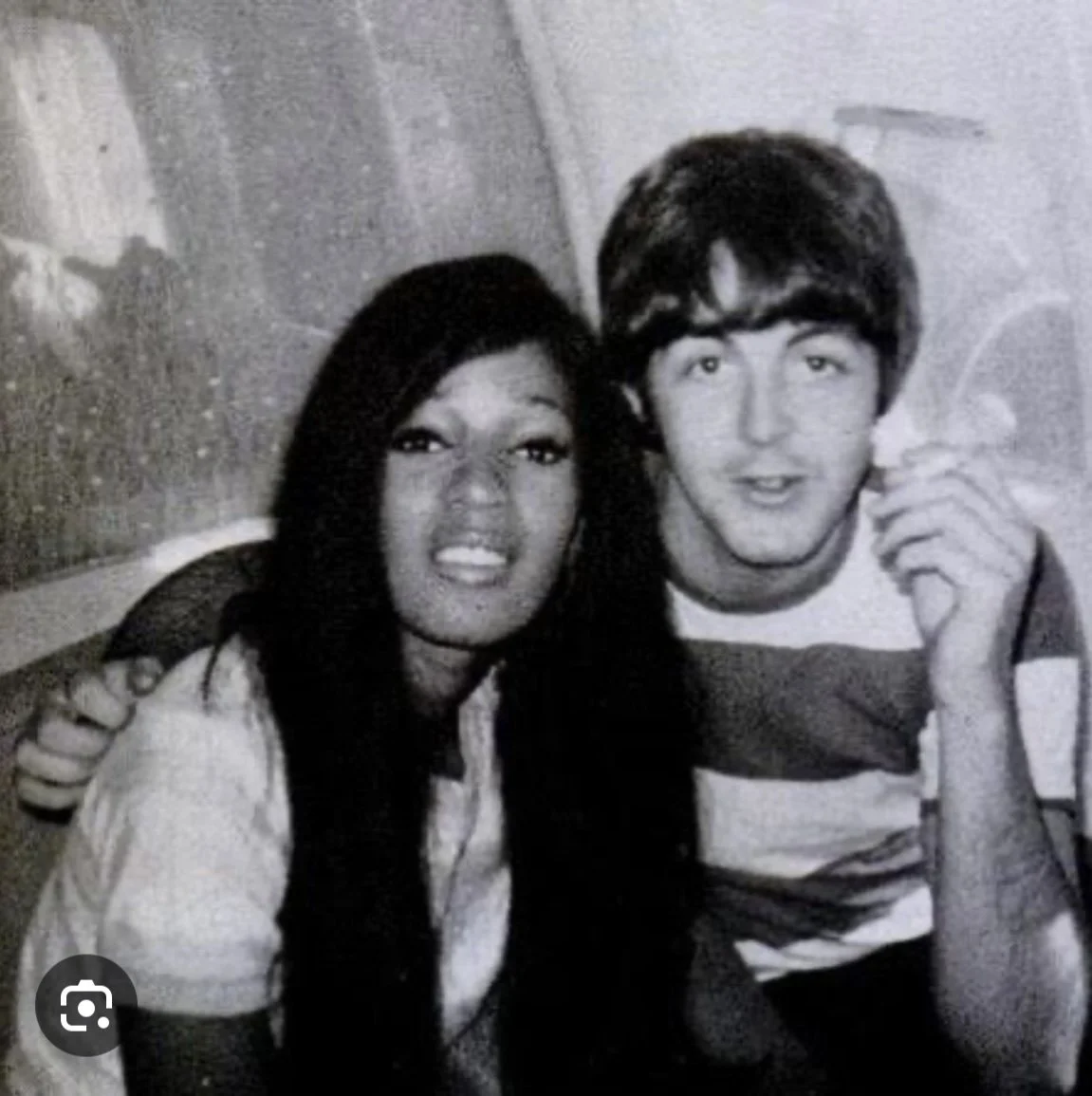
My Mother and Paul McCartney
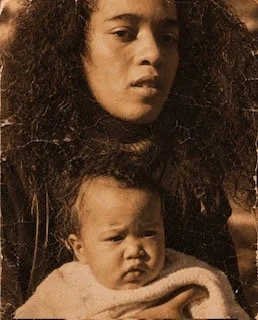
My Mother MY Life
Welcome, this is where I’ll share memories, stories and the ongoing journey of finding Estelle.
Entry 1
By Toyin Love
August, 10, 2026
Estelle Bennett’s only daughter
Growing Up with a Mother Who Suffered from Mental Illness and Later Discovering She Was a Music Icon
She was a disturbing sight. A long, matted wig dragged hideously down her back, yet she wore it with prideful elegance. The makeup on her face was grossly exaggerated and misapplied, like a little girl who had just discovered her mother’s cosmetics bag. Black eyeliner recklessly extended from her eyelids all the way across her temples. Red lipstick was smeared across lips that draped over her receding gums. But none of this stopped her from flashing a frequent smile.
A scraggly beard of black and gray hairs had formed on her chin, adding to an unkempt appearance that often alarmed people and caused them to stop and stare. She was impossible not to notice. But the attention didn’t seem to bother her. She was used to being in the limelight. Because once upon a time, The Rolling Stones opened concerts for her group, and she toured with The Beatles on private jets. So in her mind, she was simply stage-ready for her next performance.
Her body was draped in bedraggled clothing, sometimes visibly too small, causing her flesh to spill over the fabric—a striking contrast to the fact that she had once attended New York City’s prestigious Fashion Institute of Technology and styled many of the looks for her iconic musical group.
She regularly carried a collection of tattered grocery bags filled with miscellaneous items: remnants of food, hair accessories, coloring books, crayons, and sometimes toys and little girls’ clothing for me. Even when I was a grown woman.
Accessories were a big part of her outfits. Pieces of plastic bags tied around her wrists formed stacks of bracelets. Her crossbody purse was firmly pressed against her body, quietly guarding her small bills, food stamps, and other state benefits. And around her neck, she wore a cross representing the crucifixion of Jesus. I wonder when Jesus Christ became her Lord and Savior. I truly wonder if He ever really came to save her.
To onlookers, she was easily dismissed as a typical “bag lady,” struggling on the unforgiving streets of New York City. But beneath all of that outward chaos lived a gentle soul and an afflicted spirit. She was not simply a woman people passed on the street. She was Estelle Bennett, famed singer of The Ronettes, who had once stood beneath the bright lights of the stage and traveled the world as a music star. And silently, behind the fame, the music, and the memories of another life, she was suffering from severe mental illness. SHE was my mother.
__________
Entry 2
By Toyin Love
August, 27, 2026
Before her mental illness, my mother lived in a dream come true. She was part of the Ronettes, one of the most iconic girl groups of all time, made up of three relatives: my mother, her younger sister Ronnie Spector, and their cousin Nedra Talley. The girls grew up in Harlem, New York City. My grandmother and other relatives had big dreams for the girls—dreams that were miraculously achieved but tragically short-lived.
At the height of their fame, the Ronettes were part of an extraordinary music world. They became close with the Beatles and later toured with them in the United States and Canada. The Rolling Stones also opened for the Ronettes during their 1964 tour of the United Kingdom. Fans everywhere recognized the Ronettes for their signature hair, stacked into gravity-defying beehives, thick black winged Cleopatra eyeliner, and striking beauty. But growing up, nobody ever revealed to me that my mother had once been very famous, very rich, and a significant contributor to music history. I didn’t recognize any star qualities or anything beautiful about her. I only saw in her what I had learned from others while growing up. My father physically and emotionally abused her. I never saw him love her or show her any kindness. My relatives shunned her. I witnessed strangers judging her with their staring eyes.
To me, my mother was bizarre, dirty, dysfunctional, and ugly. I’m so ashamed to share that my mother was repulsive to me. She represented everything I did not want to be. I was disgusted by her. In fact I despised her. My entire being was engulfed by sheer repulsion whenever I was in her presence.
Throughout my childhood, my mother was always a profound enigma. Her essence was shrouded beneath the cloak of mental illness. Her love for me was thwarted by a chasm that divided the two of us into worlds of our own. She was a recluse in the comfort of her own mind. I grew up confused and longing for a mother—just not my mother.
My childhood was overwhelmed with struggle, despair, and pessimism as I lived with various relatives and searched for a place to call home. Yet I possessed a fierce determination to thrive in school, earning scholarships to private schools and ultimately a master’s degree as a Woodrow Wilson Fellow. I escaped any connection to my mother by steeping myself in the sanctuary of academic institutions, creating a safe haven away from her sporadic and unnerving intrusions into my life. For four years, I was protected by the distance and the idyllic walls of the Berkshire Mountains at Williams College. When I was twenty-two years old, I returned to New York City from college with profound compassion for my mother. I began looking at her differently. Sadly, I still carried a modicum of shame, but I slowly began to embrace the reality of my mother’s mental illness and understand that she was sick. Then one day my uncle said to me, “Your mother is sick. If she were in a wheelchair, would you be embarrassed by her?” This resonated… My heart began to fill with sorrow for my mother, this woman who was contending with the streets of New York City simply to survive. Instead of living to keep her out of my life, I began to extend small gestures of kindness. My spirit expanded and began to ache for my mother, yearning to understand the woman who never stopped loving me. And so, I began the journey to unravel the mystery of my mother’s life.
My quest was thwarted when I started having children of my own and gave them my undivided attention. Thus, I was determined to be the mother I never had. Now, after having four sons and a stillborn daughter, I am ready to tell our story.
The story of my mother and me.
_________
Entry 3
By Toyin Love
September 12,2026
On March 21, 1971, Estelle Bennett gave birth to me, yet I was still without a mother. My newborn screams and cries went unnoticed. Sometimes she couldn’t even tend to my basic needs of feeding me and changing my diaper. Like most newborns, I vied for my mother’s attention. She looked at me but couldn’t see me.Some say she was gone before I came. Her mind was elsewhere, perhaps mourning the dissolution of her famed life.
When I was first born, my mother and I lived with my grandmother and other relatives in an exclusive apartment building in Manhattan on Riverside Drive. My mother depended on my grandmother to help take care of me. After about a year of courting, my father finally convinced my mother to move with me to a small one-bedroom apartment in an undesirable neighborhood in Brooklyn. I was given the bedroom, and the living room briefly served as a bedroom for my parents until my father secretly started another family just a few blocks away. He had two daughters who were one and two years younger than me.
My parents became separated before I could form a memory of them being together.
I was only three years old when my father sent me to Rhode Island to live with my aunt, his sister, while my mother tried to reinvent her singing career and simultaneously ward off the demons of mental illness. Memories of this early period in my life cannot be recollected. The few photos I have just show a little girl whose fate was still yet to be determined.
My aunt told me that she and my uncle truly welcomed me and treated me as though I were one of their daughters.After living in Rhode Island for a short while, my father brought me back to my mother, and the scales were already beginning to tip toward a mental disorder that would ultimately be the culprit in her death.
The earliest memory I have of my mother is from when I was in second grade. It was the rare occasion that she came to pick me up from school. As usual, she donned her long wig, and her eye makeup was ogreish, making her stand out from all the other mothers. I vividly remember a classmate asking me if she was my mother. I responded, “No, that’s my babysitter.” Shame had already taken hold of my young ego, and I lied immediately to protect myself from the ridicule of my peers.
My mother’s peculiar appearance kept me at a great distance. I was unable to embrace her. I had to disassociate myself from her revolting ways in order to ward off the harsh judgment of others. The cold reaction from strangers had the power to make me feel helpless and ashamed. It’s regretful that such a thing would matter, keeping me away from the woman who gave me life. I callously turned my back on my mother, never wanting to find any resemblance of me in her.
Looking back, my heart hurts for that little girl whose spirit was altered in order to cope with a mother who was battling a mental disorder. Now my heart hurts for my mother, who lacked the support and resources necessary to treat her sickness so she could live a healthy life.
My mother and I spent countless hours at home together in our tiny apartment. I don’t remember ever really talking to her. She was in her own world, and I was intent on staying out of it. Essentially, I was alone, and so was she. Most of my time was spent playing in my room or reading. I loved to read. I guess it was a great way to escape and delve into someone else’s world. My father bought me a new book every week. I only came out of my room to eat and watch TV. There were a few television shows that I really enjoyed, but it was awkward and uncomfortable watching TV because I had to sit on my mother’s bed in order to do so. I hated being near her.
In fourth grade, I was finally allowed to walk home from school with my friends. I enjoyed this independence, but I wasn’t completely free. The threat of my mother’s presence hovered in my psyche. So every day after being dismissed from school, I knew to do a quick undercover surveillance of the school’s perimeter to check for my mother. Sometimes she would just be lingering about, which forced me to scurry before she saw me and hollered my name, causing my friends to ponder our connection. If I caught her at my school, I told on her, pleading with my father to scold her and tell her to stop coming to my school. My father chastised her as if she were a child, yelling and warning her to stay away. This was nothing new, as he was always abusive toward my mother. He would shout at the top of his lungs, calling her all sorts of derogatory names associated with mental illness, like “crazy” and “sick in the head.” Often, he tugged at my mother’s wig, and she would desperately try to hold it in place until it and she collapsed onto the floor. I vividly remember her being all disheveled, scrambling to put her wig back on. My father’s abusive warning only momentarily deterred my mother from coming back to my school. She haunted me until I switched schools in fifth grade and made certain she was never given any information about my new school.
But she never stopped trying to find me.
Please explore the growing gallery of archival photographs and my journal chronicling discoveries and memories of my mother, Estelle Bennett. A shop celebrating her life and legacy is coming soon. Please check back for updates.🤎
GALLERY.JOURNAL.SHOP.
Connect With Us
We’d love to hear from you. Whether you’d like to collaborate, share memories, ask a question, or learn more about our legacy efforts.